Kawaguchiko in Every Season: What to Expect and Best Times to Visit
Of all the places I photograph couples in Japan, Kawaguchiko is the one I return to most. Not just because of Mount Fuji, though the mountain is reason enough. It is because the area's quality changes with every season in a way few destinations can match. The same lake, the same shoreline, the same mountain in the background, and yet autumn feels nothing like spring, and winter feels nothing like summer. Each version of Kawaguchiko is worth experiencing, and each one offers something distinct for couples planning a photoshoot or a proposal.
This is a guide to what the area looks like throughout the year: what to expect from the weather, the scenery, and the crowd levels, and when to visit depending on what you are hoping to find.
Spring
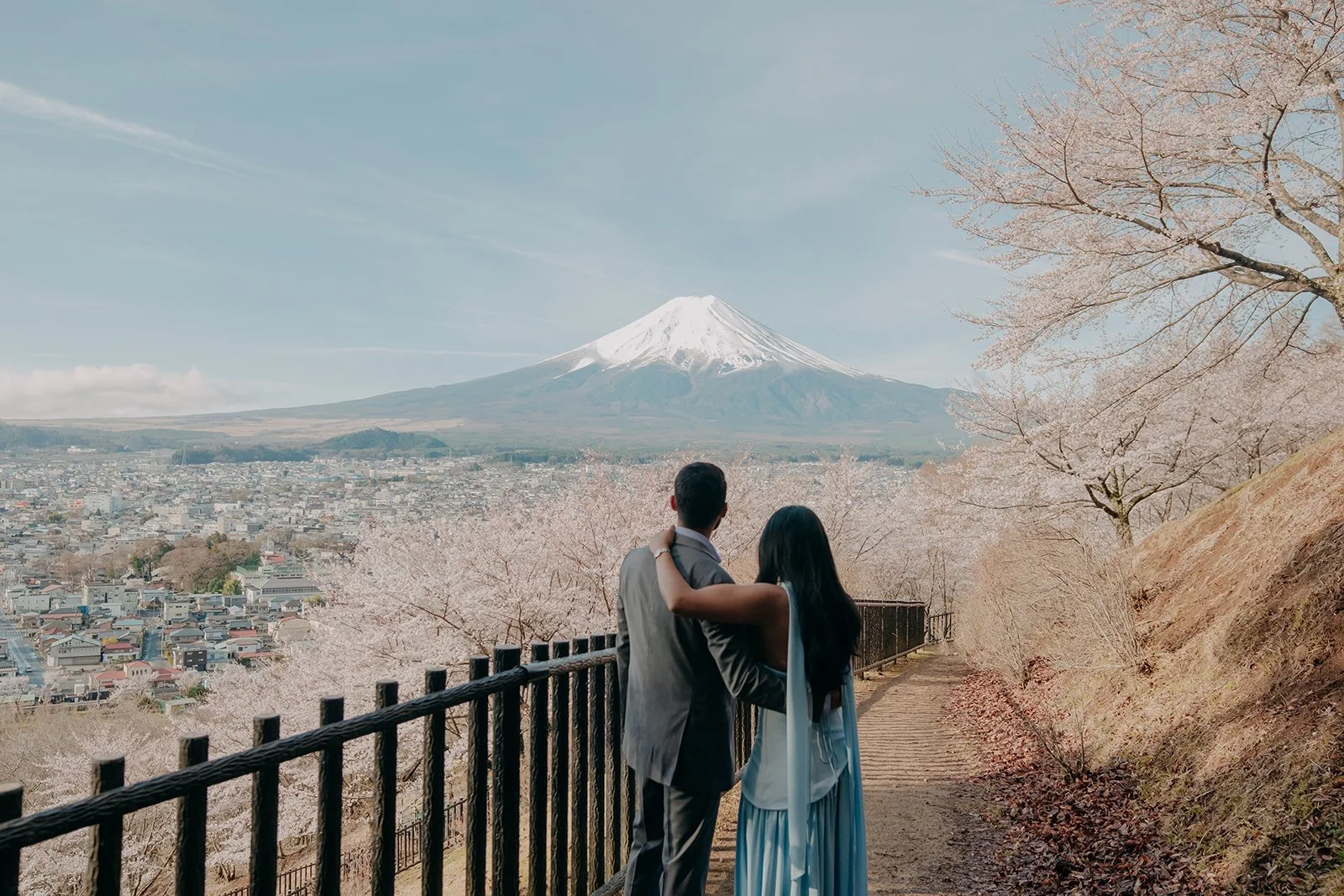
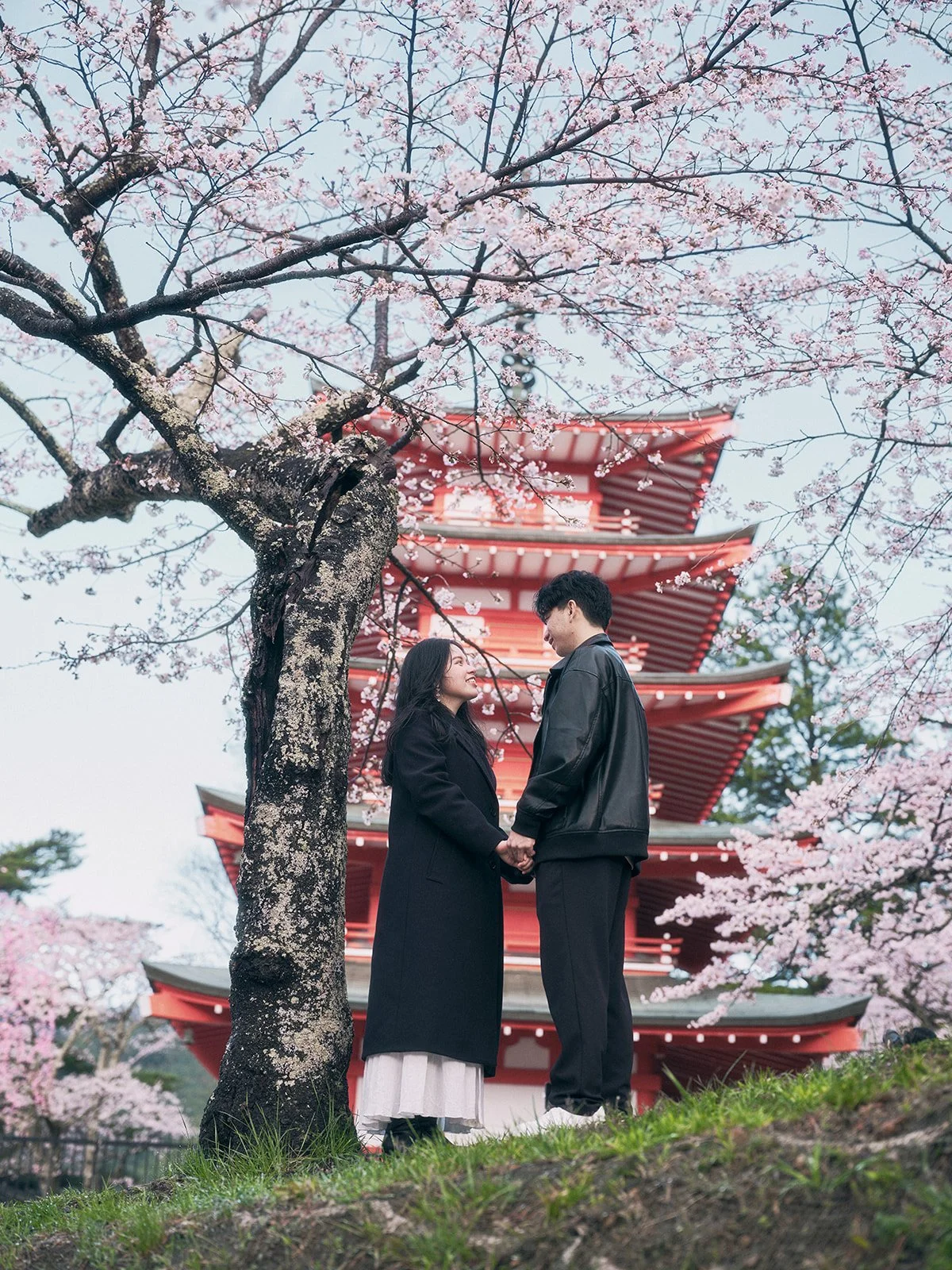
Early April through end of April is arguably the most photographed season in Kawaguchiko, and for good reason. The cherry blossoms around the lake bloom in an almost cinematic way: soft pink trees lining the shoreline, their reflections on the water below, and Mount Fuji rising in the background. It is a combination that draws photographers and visitors from around the world every year.
The peak bloom window is short, usually one to two weeks, and it shifts each year depending on temperatures. Late March to mid-April is the typical range for Kawaguchiko, which tends to bloom a little later than central Tokyo due to the higher elevation. Getting the timing right requires some flexibility and a willingness to monitor the forecasts as the season approaches.
The crowds during peak bloom are significant. The Chureito Pagoda viewpoint and the most popular lakeside spots fill up early in the morning and stay busy throughout the day. For proposals and intimate photoshoots, the early morning hours before 7:00 AM offer the best combination of good light and a higher chance of fewer crowds. Arriving before most visitors means having some of Japan's most iconic spring views largely to yourselves.
For those who miss the peak, the days just before and just after full bloom have their own beauty and considerably fewer people. It is always worth coming anyway.
Summer
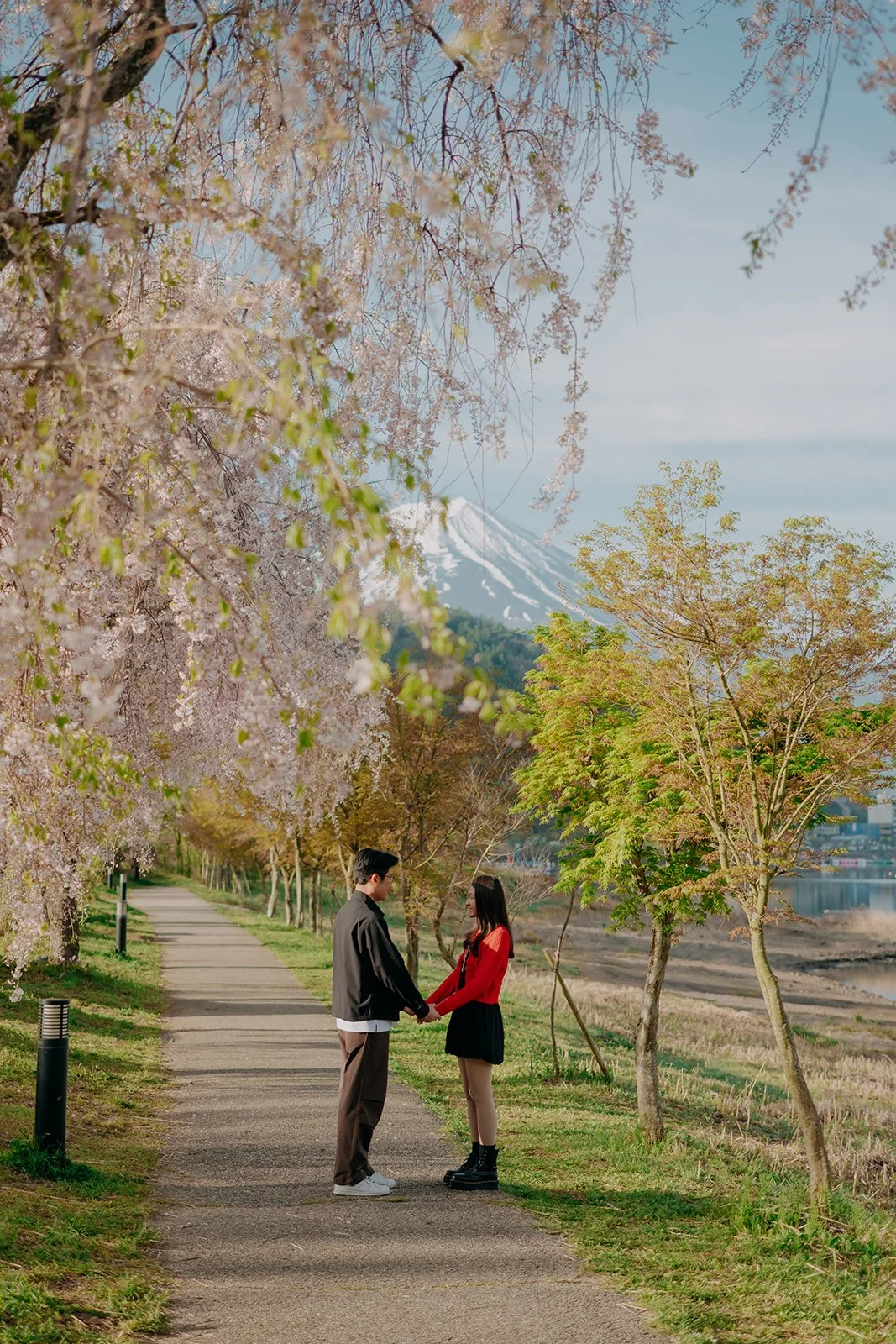
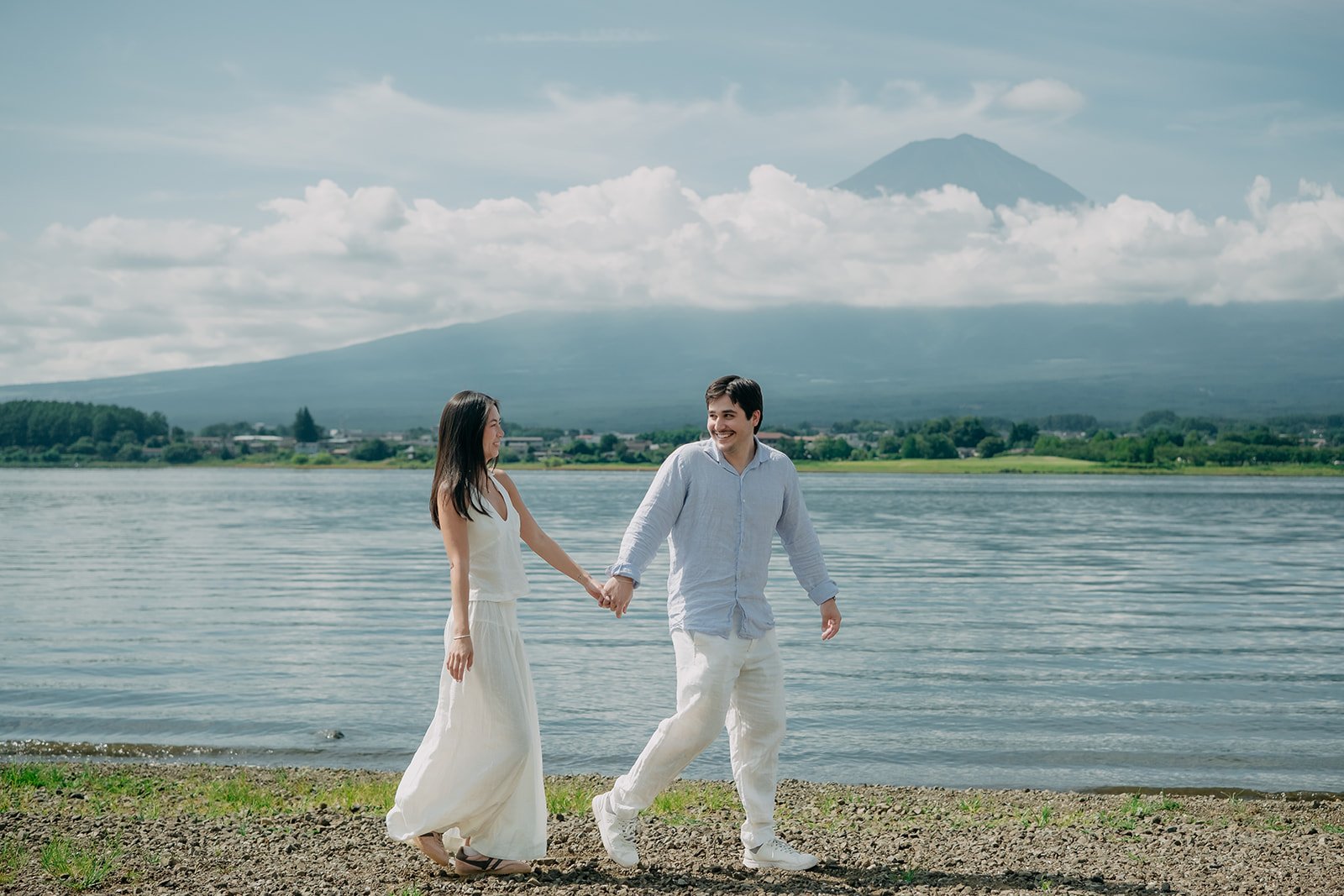
Summer in Kawaguchiko runs from June through August, and it brings a version of the area that feels entirely different from the spring. The cherry blossoms are long gone, replaced by deep, saturated greens across the hills and the banks of the lake. The foliage is lush and full, and the mountain often appears with a clean, dramatic clarity on clear mornings before the heat of the day builds cloud cover around the summit.
The temperature and humidity in July and August can be intense. It is noticeably cooler in Kawaguchiko than in Tokyo, as it sits at a higher elevation, but the summer heat is still something to plan around rather than ignore. Starting a shoot before 9:00 AM means cooler conditions, softer morning light, and a much quieter park environment before the day's visitors begin to arrive.
Mount Fuji visibility in summer follows a reliable pattern: clear in the early morning, often obscured by cloud cover by mid-morning or early afternoon. This is one of the most consistent reasons I recommend morning sessions for any shoot around the lake in the warmer months.
June marks the beginning of the rainy season in Japan, which affects Kawaguchiko as it does everywhere. Rain is manageable and can create beautiful, moody conditions for photography, but it adds an element of unpredictability. Staying flexible on dates and having a contingency plan in place is always worth doing during this period.
Autumn
If I had to choose a single season to recommend for a proposal or a couple's photoshoot at Kawaguchiko, it would be autumn without hesitation.
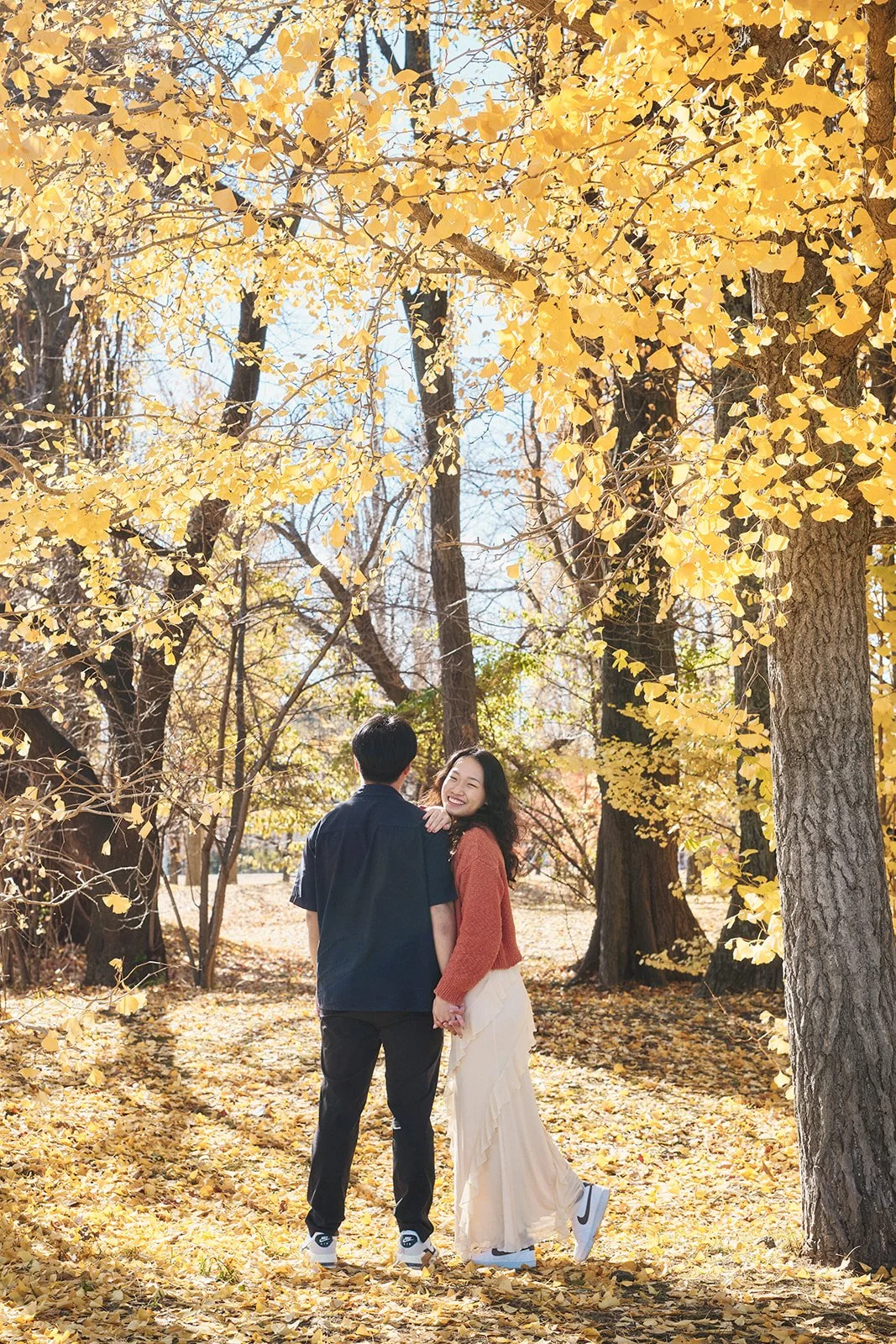
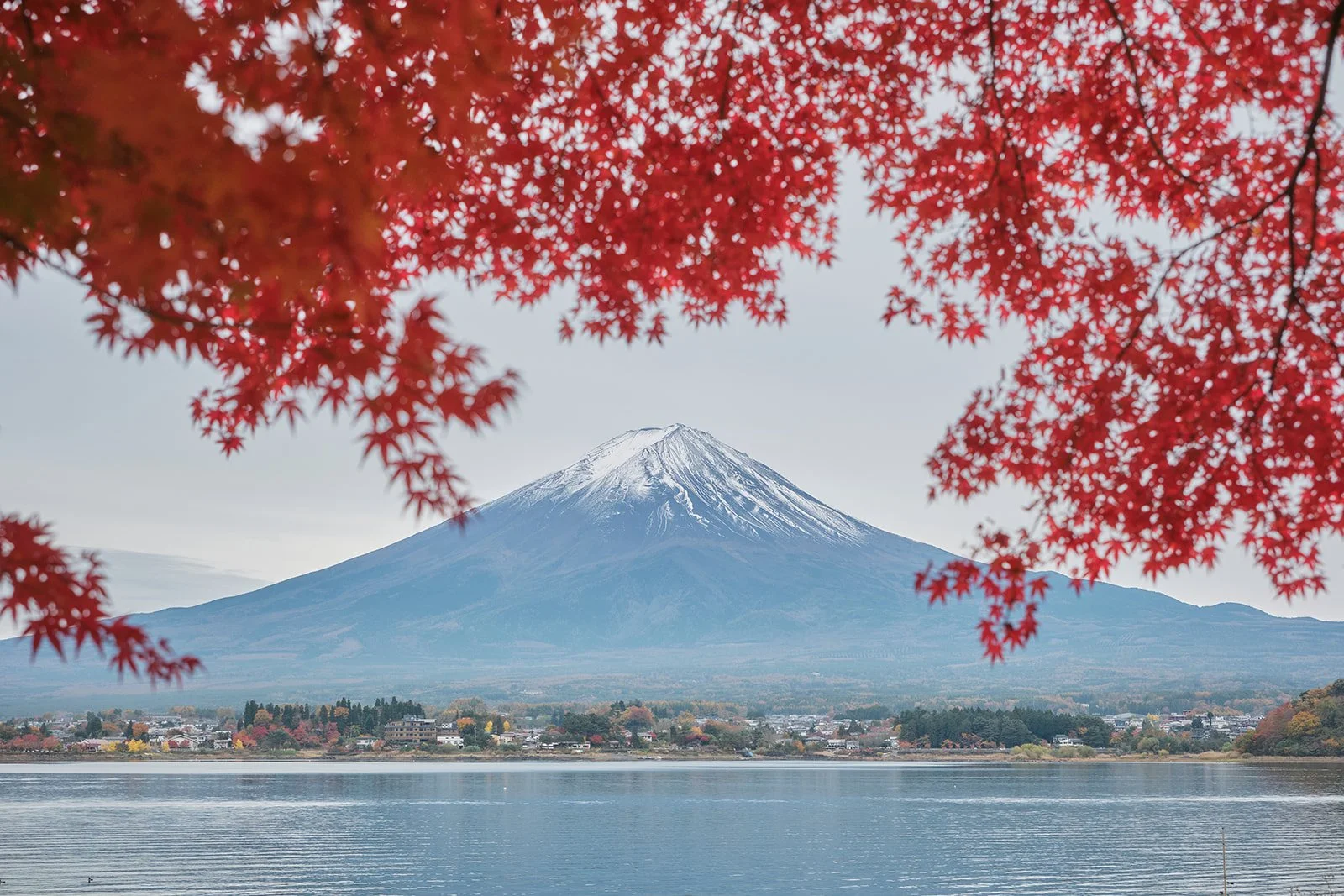
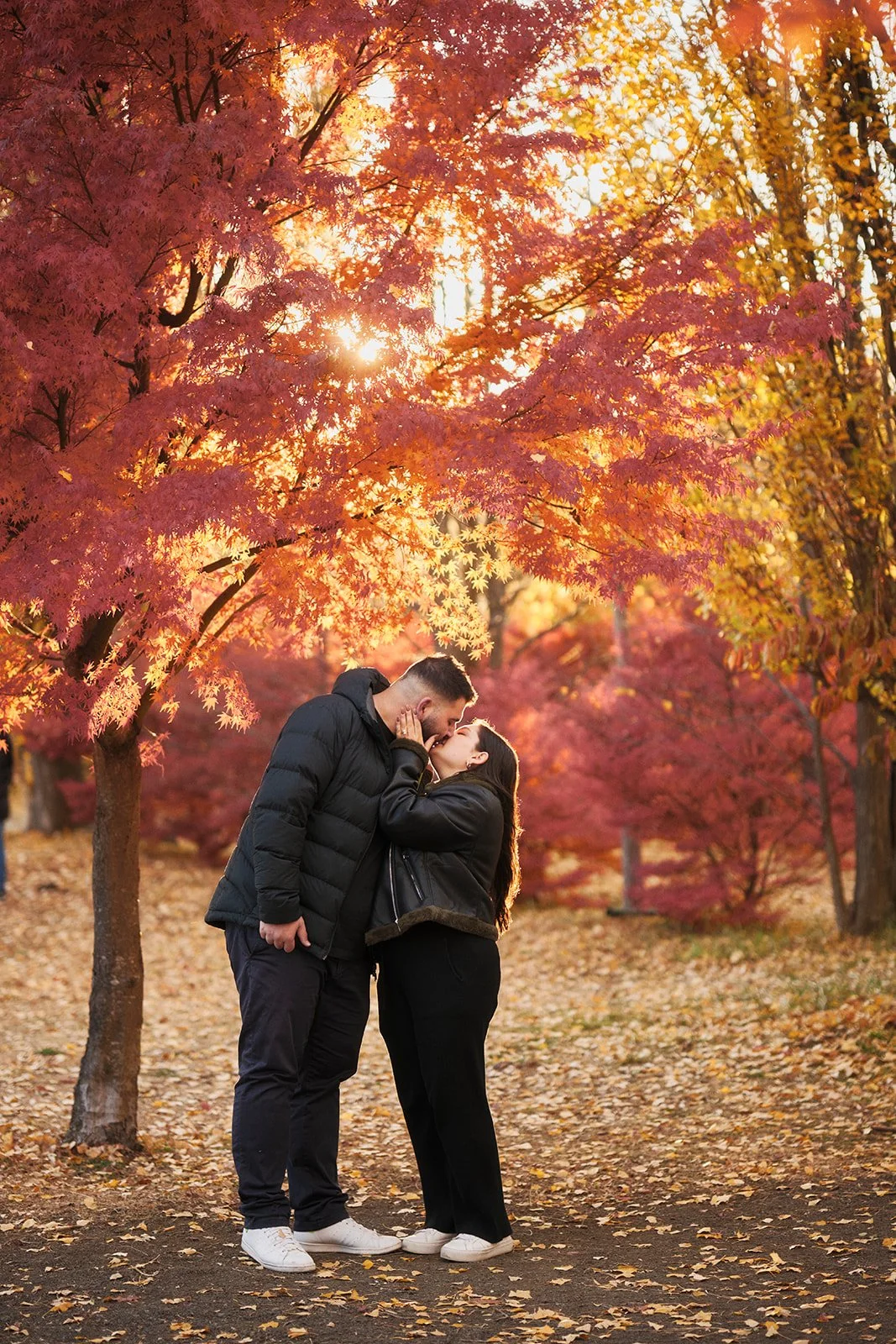
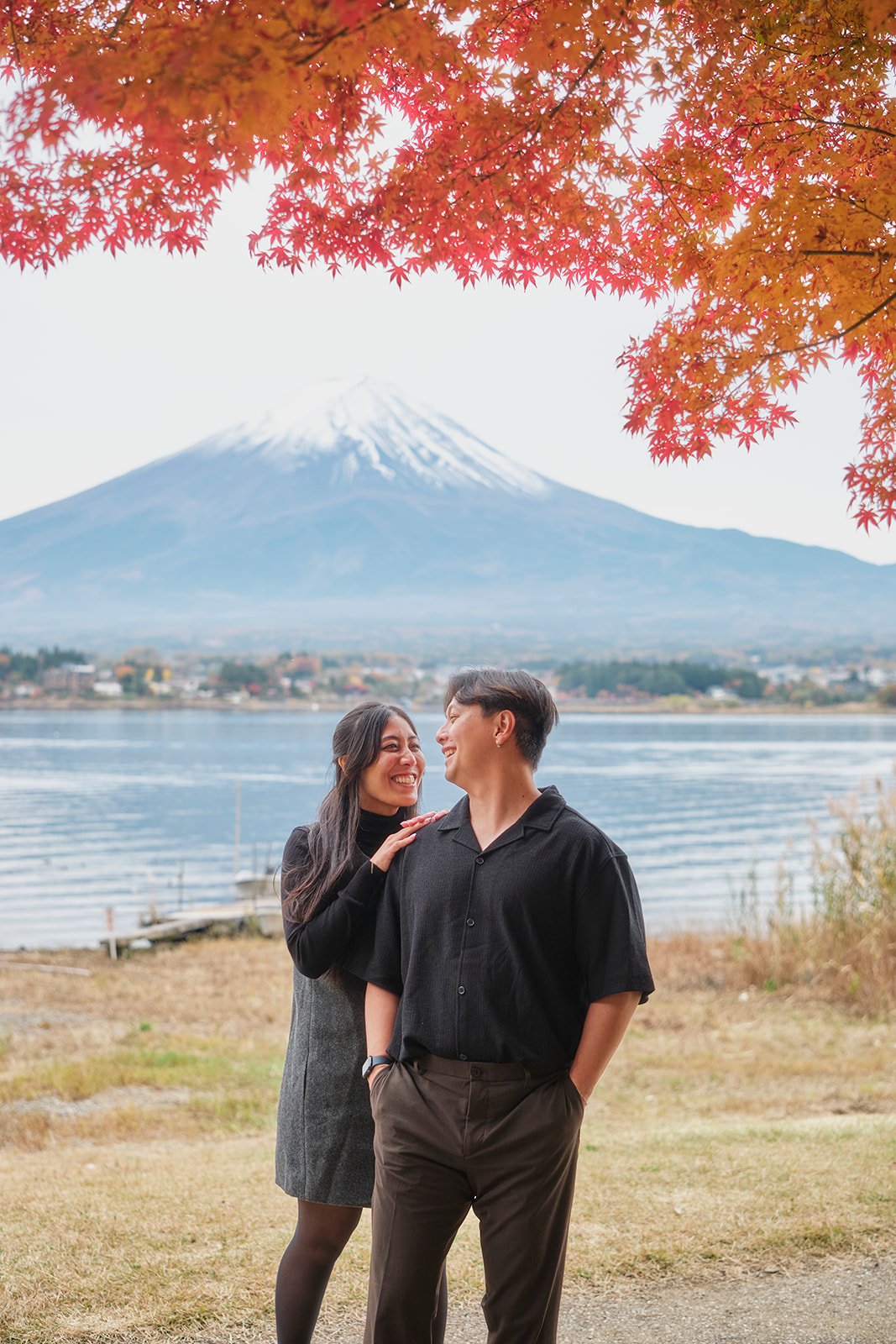
From mid-October through mid-November, the trees around the lake transform. The maples and other deciduous trees turn shades of red, orange, and gold that layer across the hillsides and lakeside paths in a way that genuinely has to be seen in person to be fully appreciated. The reflections of autumn colors on the surface of Lake Kawaguchiko on a still morning are among the most visually stunning things I have encountered in ten years of photographing in Japan.
The light in autumn also behaves differently. It sits lower in the sky for longer, producing longer golden hours and a warmth to the late afternoon and early morning that summer simply cannot match. Sunset in autumn comes earlier, making late-afternoon sessions more practical for catching the mountain in good light.
Crowds in autumn are significant around peak foliage, particularly at well-known viewpoints. Nagasaki Park, Momiji Tunnel, and the lakeside walking paths near Kawaguchiko Station all see high foot traffic during peak weekends. Weekday sessions or very early-morning starts are the most effective ways to find quiet and privacy during this period.
For proposals specifically, autumn at Kawaguchiko is a backdrop that does a remarkable amount of work on its own. The colors, the mountain, and the water together create a setting that requires very little else to feel extraordinary.
Winter
December through February brings the quietest and, in some ways, the most dramatic version of Kawaguchiko. The crowds thin considerably after the autumn season ends, and the area takes on a stillness that the warmer months cannot offer.
Mount Fuji in winter is often at its most visible. The cold, dry air reduces the atmospheric haze that can obscure the mountain in summer, and the snowcapped summit sits against blue winter skies with a clarity that is hard to match at any other time of year. For couples who want the mountain front and center in their photos, winter is one of the most reliable seasons to guarantee it.
The surrounding landscape in winter is bare and stripped back: no blossoms, no autumn color, just the lake, the sky, and the mountain. It is a more minimal aesthetic than the other seasons. Still, there is a beauty to that simplicity that photographs exceptionally well, particularly when there is snow on the ground around the lake.
The cold is real and worth preparing for. Early morning temperatures in January and February can drop well below freezing, so dressing in warm, layered clothing is essential for any outdoor session. Sunrise in winter comes later, which means a 7:00 or 7:30 AM start is more manageable than the pre-dawn arrivals required in summer.
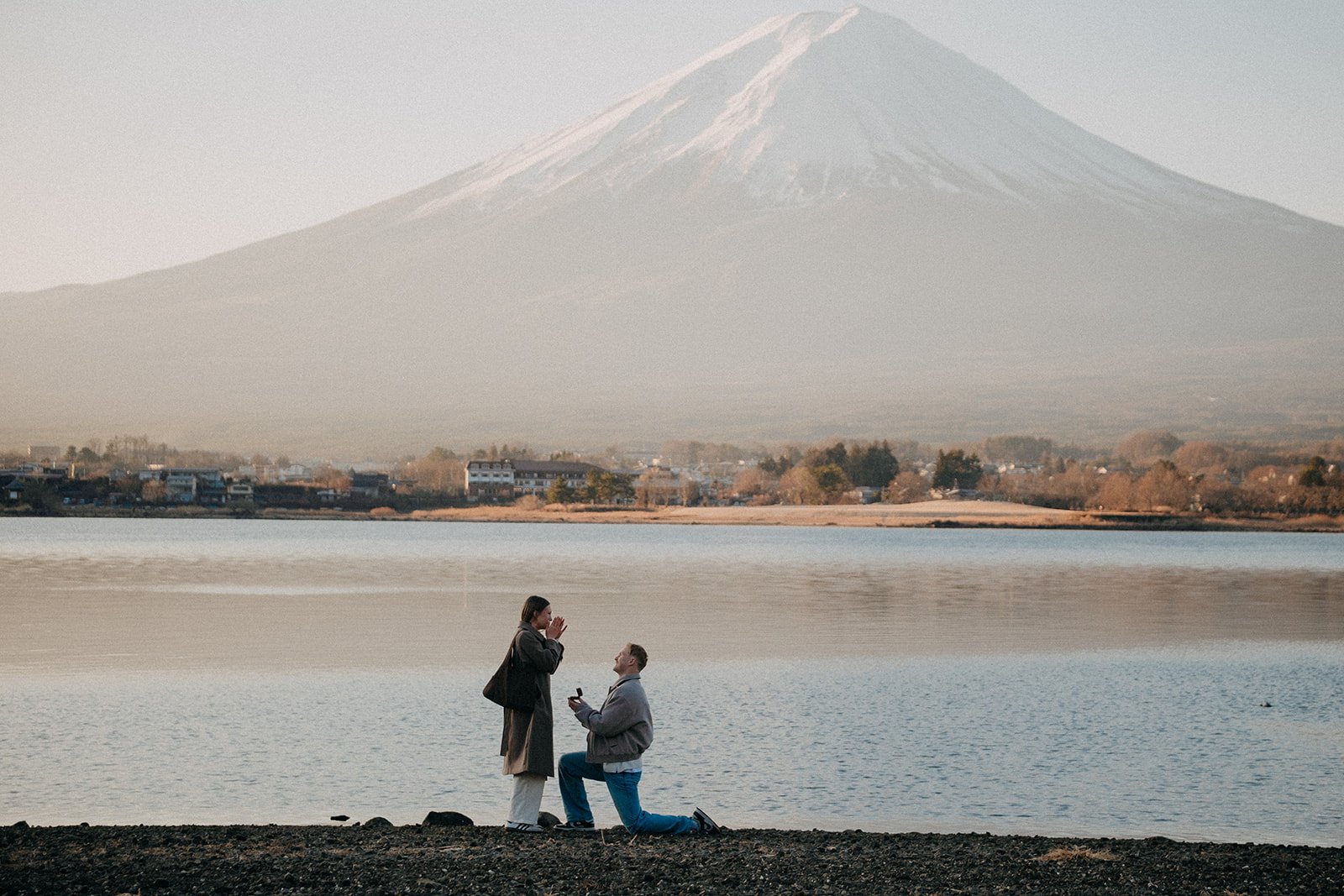
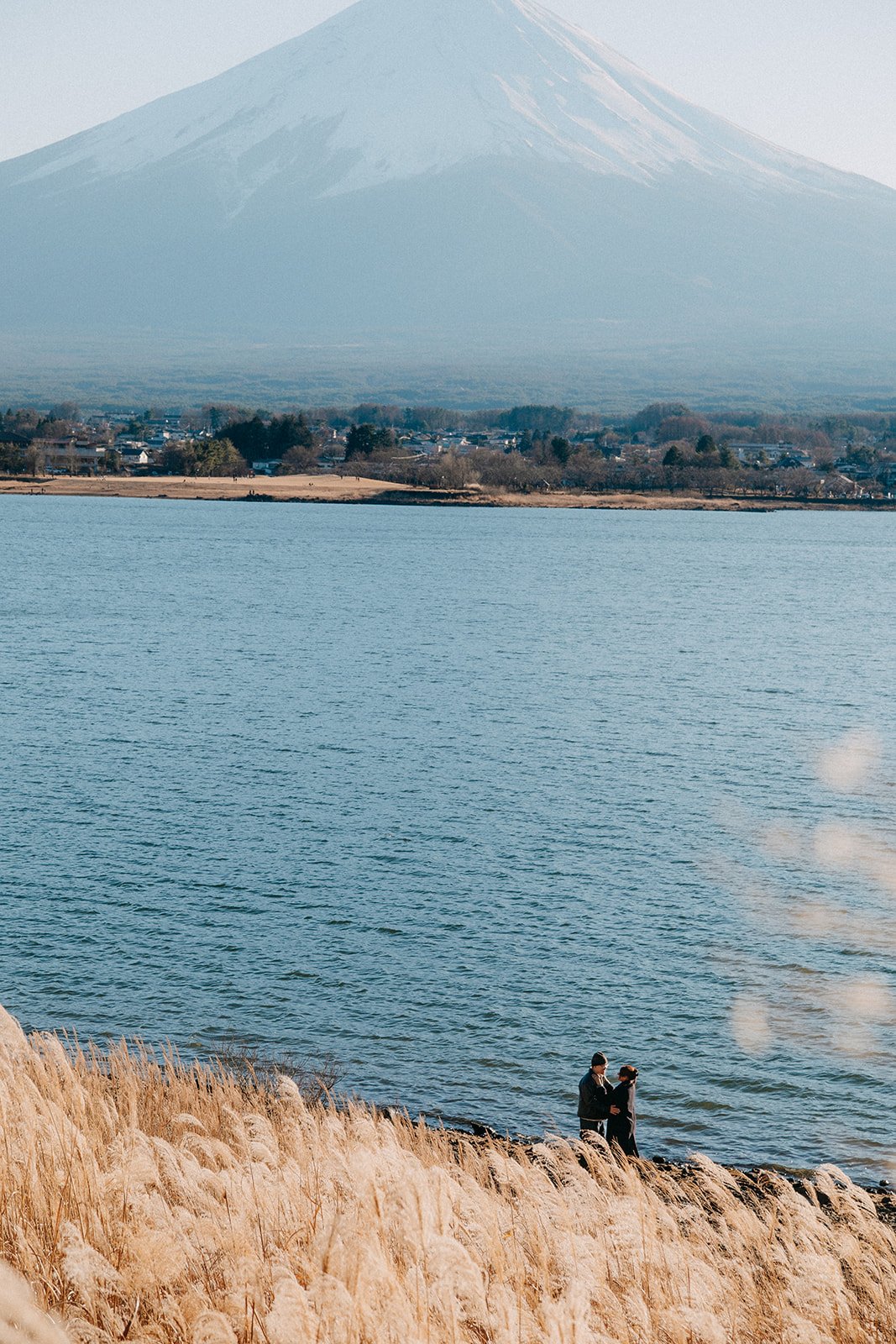
Regardless of the season, a few things about Kawaguchiko remain consistent and worth knowing before you go.
Getting there from Tokyo is straightforward. The Kawaguchiko Express bus from Shinjuku Station takes between one hour 30 minutes and one hour 45 minutes and is the most efficient option. Having a car on the day of a photoshoot gives access to spots that are difficult or impossible to reach by public transport alone, including secluded lakeside areas and elevated viewpoints offering a different perspective on the mountain.
Mount Fuji visibility is never guaranteed, regardless of season or forecast. The mountain has its own relationship with cloud cover that does not always follow the weather report, and the most honest advice I can give is to arrive early, stay flexible, and trust that the area is worth photographing with or without the summit in full view.
Planning a trip to Kawaguchiko for a proposal or photoshoot and not sure which season fits your vision? Get in touch, and let's talk through what the area has to offer during your visit. I have photographed here across every season, and there is always a way to make it work.